您的当前位置:首页 > 财经宏观 > Economic Watch: China's auto output, sales reach new highs in 2025, building global win 正文
时间:2026-06-11 19:14:37 来源:网络整理 编辑:财经宏观
This photo taken on May 13, 2025 shows a view of a production line at the workshop of a vehicle comp 丰都新闻网 陈万喜
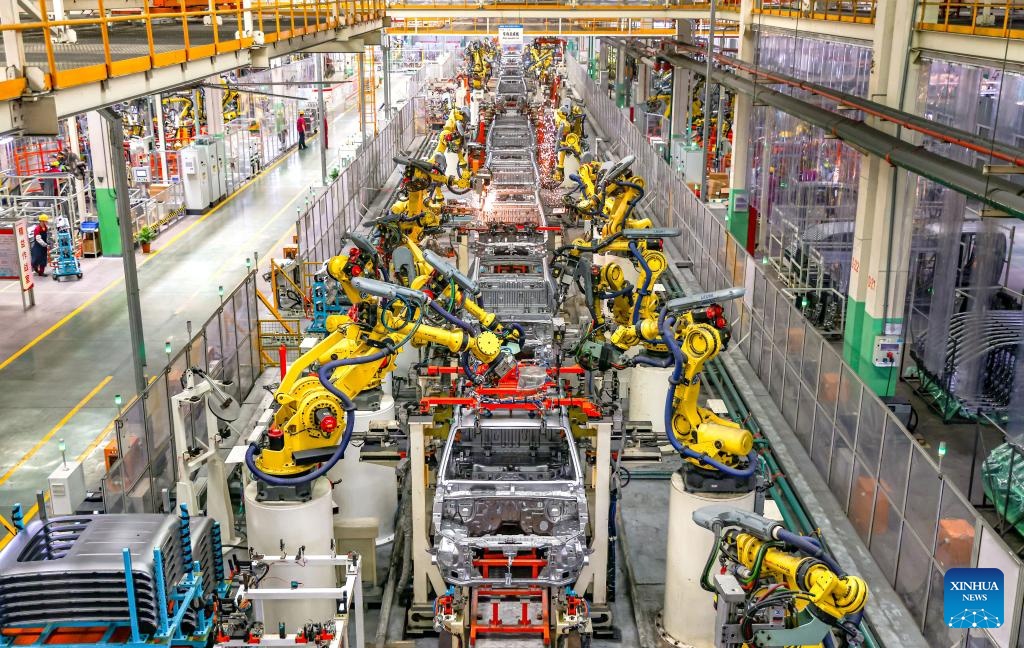
This photo taken on 丰都新闻网 陈万喜May 13, 2025 shows a view of a production line at the workshop of a vehicle company in Jiangdu District of Yangzhou City, east China's Jiangsu Province. (Photo by Ren Fei/Xinhua)
BEIJING, Jan. 14 (Xinhua) -- China's automobile production and sales both exceeded 34 million units last year, setting a new record high, industry data showed on Wednesday, offering new cooperation opportunities and helping to establish a global win-win ecosystem in this sector.
Total auto output reached 34.531 million units last year, up 10.4 percent compared with the 2024 level, while sales rose 9.4 percent year on year to 34.4 million units, according to the China Association of Automobile Manufacturers (CAAM).
China's auto output and sales remained first globally for 17 consecutive years, the association noted. Automobile production and sales have remained above 30 million units for three consecutive years.
New energy vehicles (NEVs) accelerated their growth momentum, with production and sales totaling 16.626 million and 16.49 million units, respectively, marking respective year-on-year increases of 29 percent and 28.2 percent, and maintaining the top position in the world for 11 straight years, the CAAM confirmed.
"China's automotive industry continues to demonstrate strong resilience and vitality, with multiple indicators reaching new highs, marking a successful conclusion to the 14th Five-Year Plan period (2021-2025)," said Chen Shihua, deputy secretary general of the CAAM.
In 2025, with intensified and expanded implementation of the new round of large-scale equipment upgrades and consumer goods trade-in programs, a surge in new product launches by enterprises, and sustained release of user demand, annual automobile production and sales increased more than expected, Chen said.
Last year, the country exported 7.098 million vehicles, surging 21.1 percent year on year, the data showed.
In 2025, automakers paid more attention to expanding overseas markets, leading to continuous enhancement of the international competitiveness of Chinese brands. Joint ventures also achieved strong export performance, according to the CAAM.
WORLDWIDE WIN-WIN ECOSYSTEM
China's export data includes exports from joint ventures operating within the country, which is a showcase for a global win-win ecosystem in this sector, experts noted.
China's auto exports remained resilient in 2025, particularly in new energy vehicles. In 2025, exports of NEVs doubled year on year to 2.615 million units, while exports of traditional fuel vehicles totaled 4.483 million units, down 2 percent year on year.
China's competitiveness stems not from low prices, but from technological innovation and advantages in the industrial chain. This explains why foreign automakers are actively enhancing their investment and cooperation in China, benefiting from technological innovation and sharing the gains, according to experts.
Wang Qing, deputy director of the institute of market economy of the Development Research Center of the State Council, said the global competitiveness of China's automotive industry is concentrated in the comprehensive industrial chain advantages within its NEV sector, spanning from batteries and supply chains to intelligent cockpits.
Experts dismissed so-called "overcapacity" in the NEV sector, saying that from a practical demand perspective, China's production capacity is not "excessive" but insufficient. According to the International Energy Agency, global demand for NEVs is expected to hit 45 million units by 2030, while the demand for power batteries will reach 3,500 GWh -- far exceeding the current global supply capacity.
To meet the market demand, many European and American automobile brands have relocated their supply chains to China for production purposes, and have subsequently exported these products back to their home countries, Sun Xiaohong, secretary general of automotive internationalization professional committee under the China Chamber of Commerce for Import and Export of Machinery and Electronic Products, told Xinhua in an exclusive interview.
Capitalizing on its technological and industrial chain advantages, China is attracting global enterprises, including Tesla, Mercedes-Benz, BMW and Volkswagen, with these enterprises opting to integrate deeply into the development of China's auto production and supply chains, thereby contributing to the building of a stable and efficient global industrial chain.
Volkswagen Group recently inaugurated its first full-process R&D base outside Germany in Anhui, featuring comprehensive testing facilities. This center enables end-to-end development, from software to vehicle validation, slashing new model development cycles in China to 24-30 months.
China's experience is empowering Volkswagen's global growth, noted Ralf Brandstaetter, chairman and CEO of Volkswagen Group China, adding that European development cycles have accelerated from 48 to 30-36 months, driven by insights from China.
BMW China deepened its local AI ecosystem by integrating China's AI startup DeepSeek, while Porsche launched its first strategic overseas R&D center in Shanghai.
Making use of China's supply chain advantage, many foreign automotive companies have long seized cooperation opportunities, according to experts.
Japanese automakers, including Toyota and Honda, have leveraged the Chinese supply chain and cooperation with Guangzhou Automobile Group Co., Ltd. (GAC Group) to achieve growth. It is reported that in 2025, GAC Toyota's annual sales reached 756,000 vehicles, representing a year-on-year increase of 2.4 percent. GAC Honda's sales exceeded 50,000 units in December 2025, marking month-on-month growth of 23.3 percent.
Ford China leveraged the Chinese supply chain to reverse losses and achieved annual profit in 2024 and is expected to have achieved growth in 2025, Sun noted.
Ford China exported nearly 170,000 vehicles in 2024, an increase of over 60 percent year on year, ending seven consecutive years of losses, by introducing new strategies including collaborating with China's industrial chain to develop localized NEVs to accelerate its electrification transformation in China, and expanding Ford China's complete vehicle export business to provide high-quality automotive products to global users, according to a statement on Ford China's official website.
Meanwhile, Chinese automakers are increasing overseas investments, bringing new technologies, business models, and employment opportunities to local markets, and sharing new opportunities and building a mutually beneficial ecosystem, experts noted.
The Sino-German Standardization Cooperation Innovation Center in Frankfurt commenced operations in June 2025, fostering standardized outcomes in smart manufacturing.
Chinese automaker Chery has established a global R&D center network and 16 production bases, deeply integrating into the international market. Its production network spans key markets including Brazil, Iran, and Russia, while actively expanding into Southeast Asia and Europe.
Meanwhile, Chery has also fostered deep integration with local industrial chains, aiming to build an ecosystem that is win-win in nature. For example, the partnership with Spain's EV Motors exemplifies its typical practice of localizing its brand through technology sharing and joint production.
"Localized production overseas, joint ventures with foreign enterprises, and the joint construction of industrial ecosystems have become new models and highlights for Chinese automakers participating in the development of the global automobile industry," said Zhang Yongwei from China EV100, a non-governmental policy research institute. ■
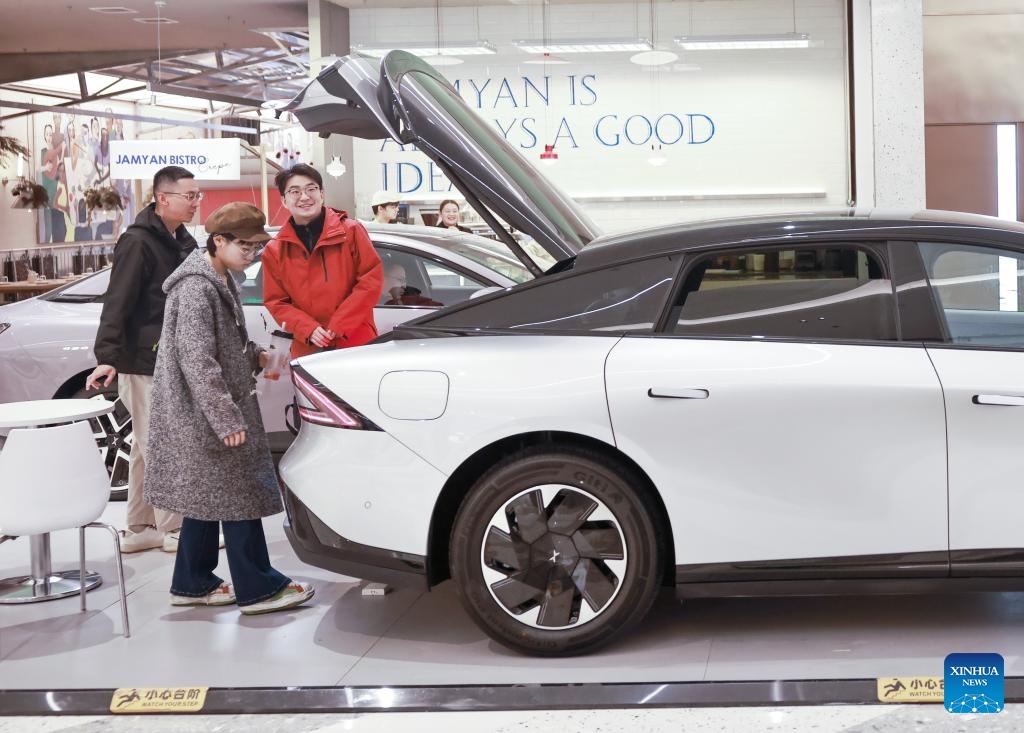
Customers learn about a new energy vehicle at a shopping center in Wuhan, central China's Hubei Province, Jan. 14, 2026. (Photo by Zhao Jun/Xinhua)
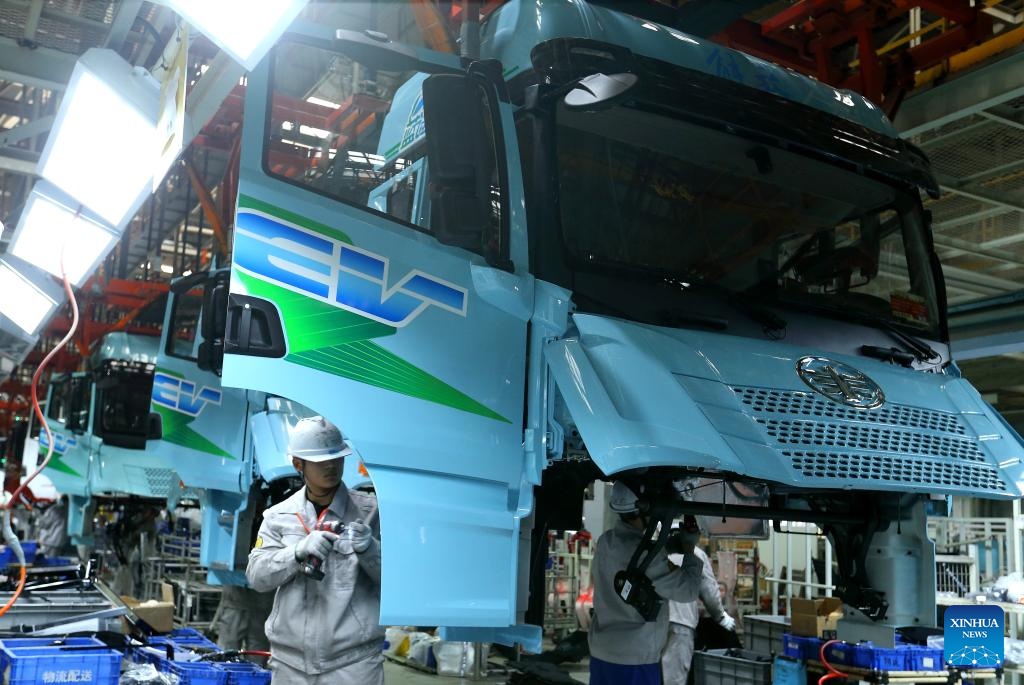
Staff members assemble a new energy vehicle at the workshop of the FAW Jiefang in Jimo District of Qingdao, east China's Shandong Province, Dec. 23, 2025. (Photo by Liang Xiaopeng/Xinhua)
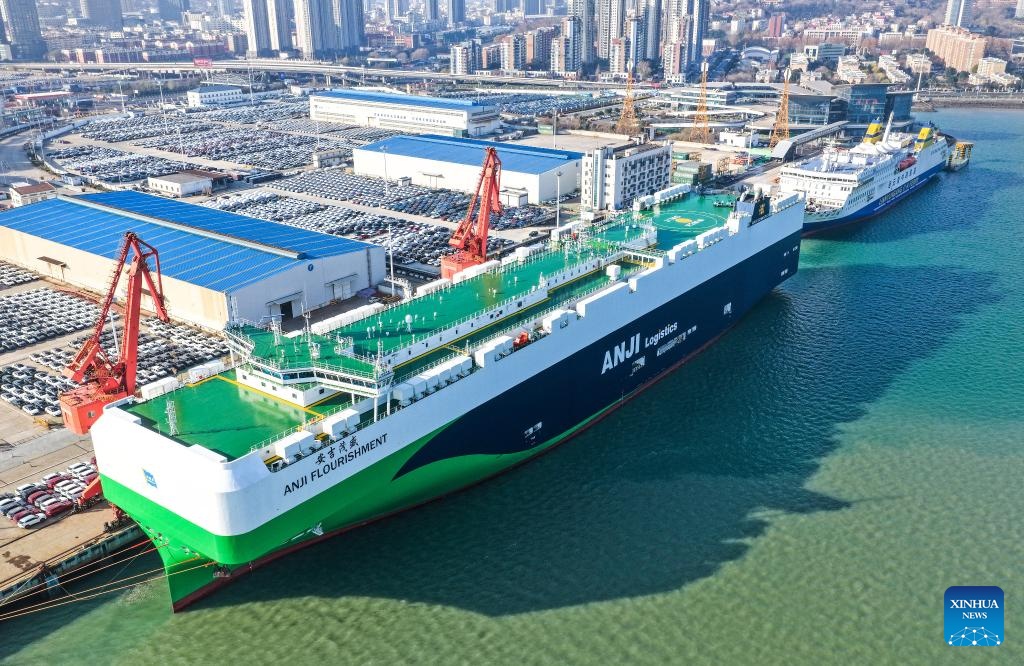
An aerial drone photo taken on Dec. 17, 2025 shows a cargo ship loading vehicles for export at Lianyungang port in Lianyungang, east China's Jiangsu Province. (Photo by Wang Jianmin/Xinhua)
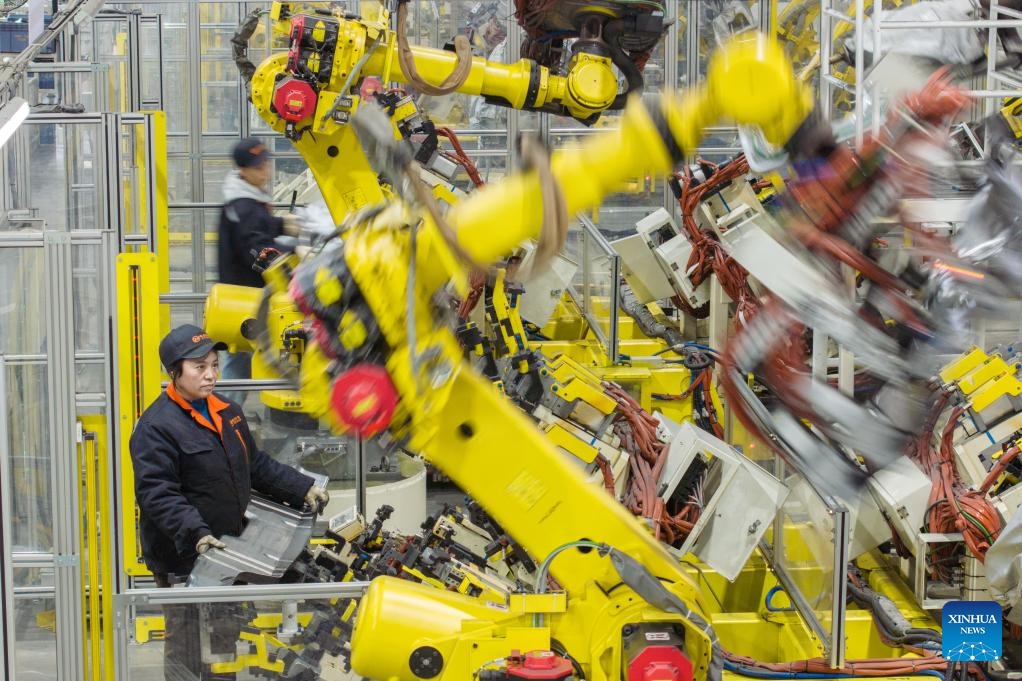
A drone photo taken on Jan. 6, 2026 shows workers operating at the digital workshop of an auto parts company in Huzhou, east China's Zhejiang Province. (Photo by Tan Yunfeng/Xinhua)
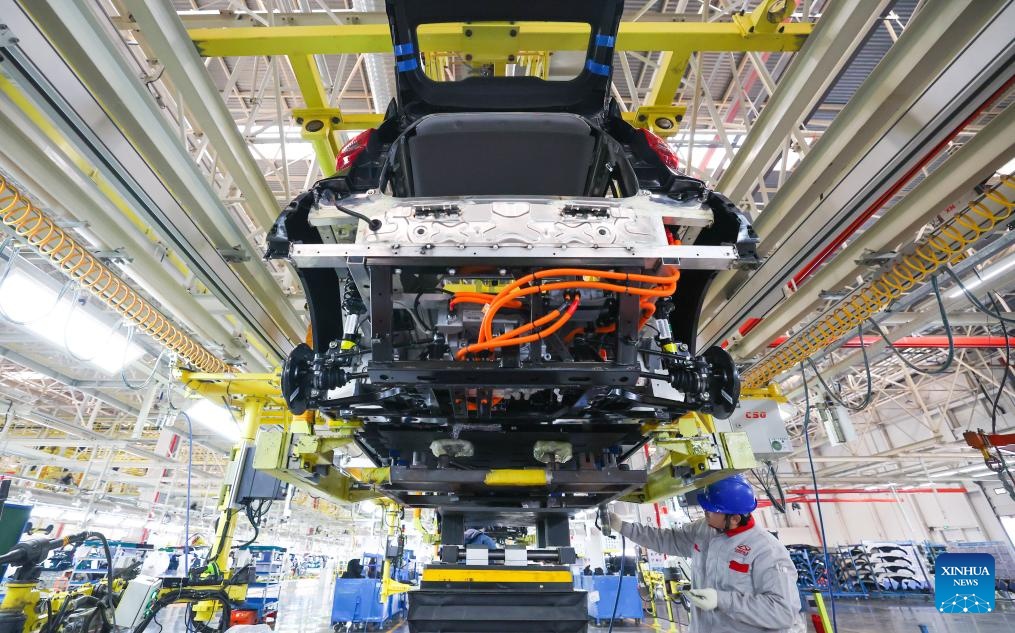
A worker assembles a new energy vehicle at the workshop of Chinese Automaker Chery in Shijiazhuang, north China's Hebei Province, Jan. 8, 2026. (Photo by Liang Zidong/Xinhua)
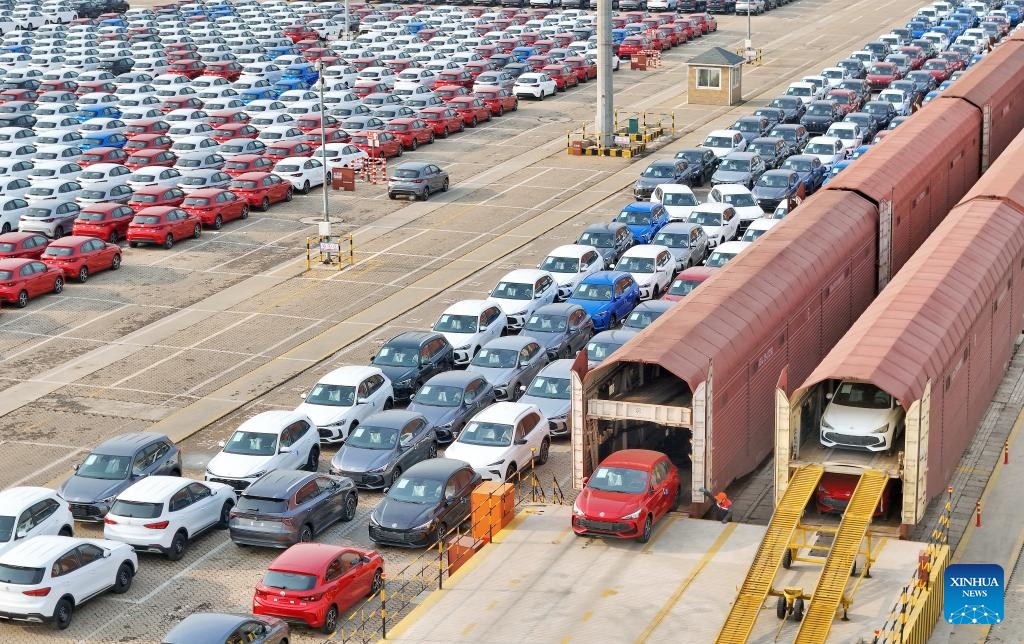
An aerial drone photo taken on Jan. 14, 2026 shows domestically produced vehicles for export at Yantai Port in east China's Shandong Province. (Photo by Tang Ke/Xinhua)
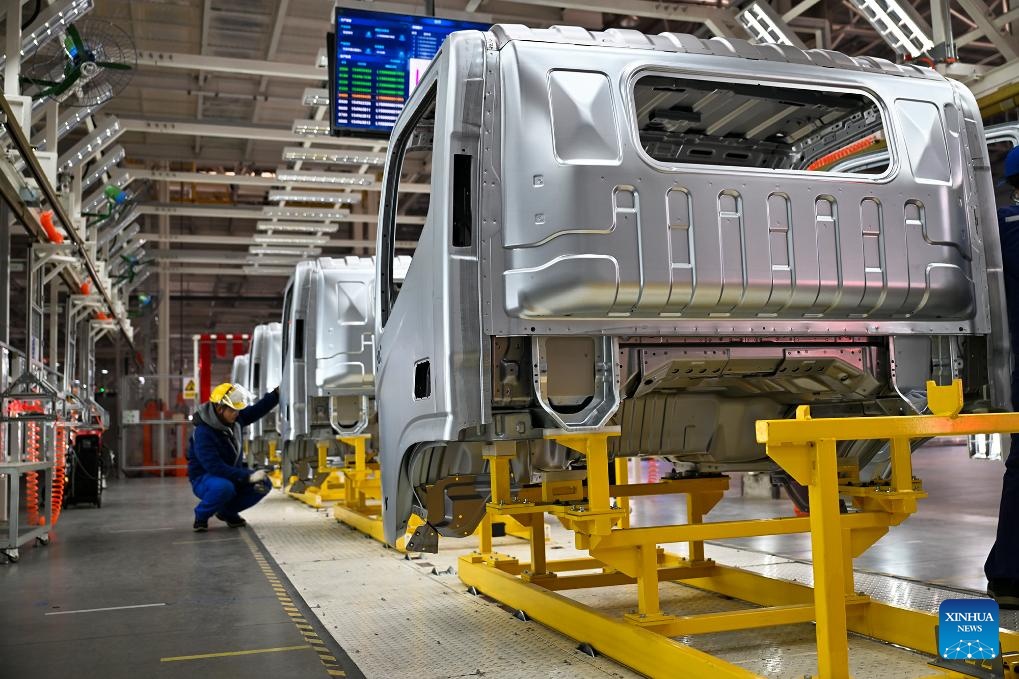
A worker operates at the assembly workshop of a new energy vehicle company in Shangqiu, central China's Henan Province, Dec. 30, 2025. (Photo by Li Heng/Xinhua)
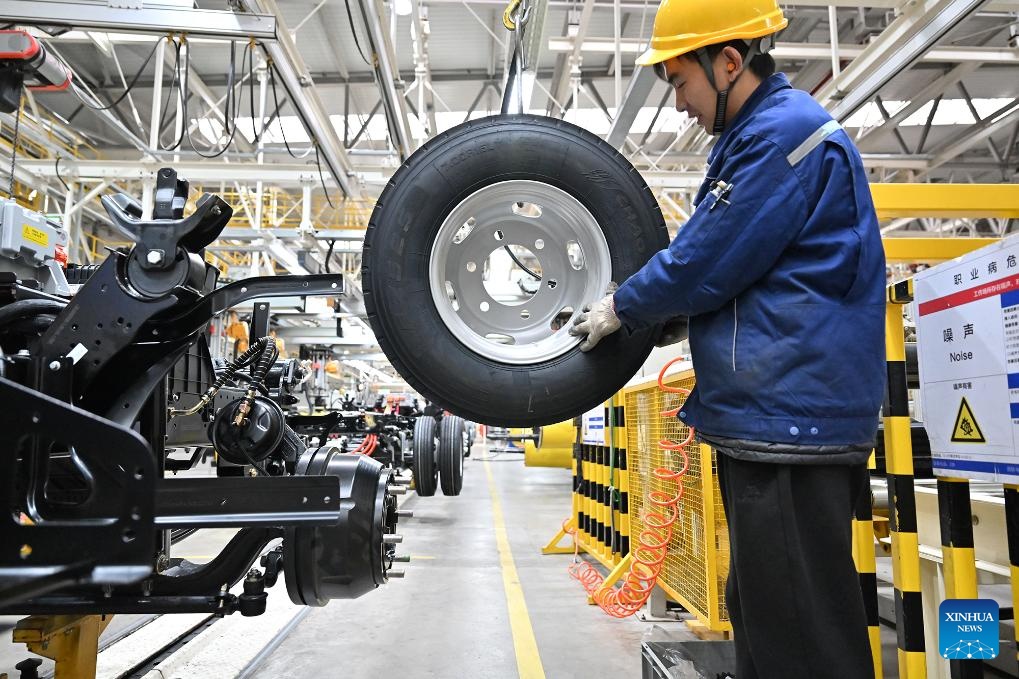
A worker operates on a light truck production line at the workshop of a new energy vehicle company in Shangqiu, central China's Henan Province, Dec. 12, 2025. (Photo by Li Heng/Xinhua)
全国外贸第一城 深圳出现三个关键信号2026-06-11 19:10
俄美乌日内瓦会谈未签署任何文件2026-06-11 19:02
经济热点快评|“人机共舞”中,有科技向善的温暖2026-06-11 18:57
全球媒体聚焦︱外媒:“人机共武” 春晚展现中国人工智能的进步2026-06-11 18:47
陈楚生2026「荒芜之境」上海站圆满落幕 全域升级铸就视听新标杆2026-06-11 18:16
视频丨流光溢彩映海峡 两岸同胞共贺马年新春2026-06-11 18:04
苏翊鸣夺得米兰冬奥会中国代表团首金2026-06-11 17:38
“祥云”AS700马年首航惊艳荆门!2026-06-11 17:16
微短剧《梦笔不能停》开机仪式在黄山市举行2026-06-11 16:51
日本对美出口连续两个月同比下降2026-06-11 16:38
房地产税收新政策实施首月新增减免税116.9亿元2026-06-11 19:09
日月谭天丨总台春晚燃动岛内:“骐骥驰骋 势不可挡”完美呈现、深入人心2026-06-11 18:47
新春走基层丨95后潜水员与千年白鹤梁的水下之约2026-06-11 18:39
新春走基层丨非遗也有“潮能力”2026-06-11 17:53
朱百元:超越血缘的30载“祖孙情”2026-06-11 17:27
“反向过年”火了!为啥?2026-06-11 17:19
文化中国行丨二十四节气·雨水2026-06-11 17:13
无人机焰火遇见非遗国潮 东山问梅村春节玩转科技+文化2026-06-11 17:09
2026巴基斯坦文化周在成都开幕2026-06-11 17:01
总台春晚硬核科技大盘点!这些技术让文化古韵更具新意2026-06-11 16:30
